


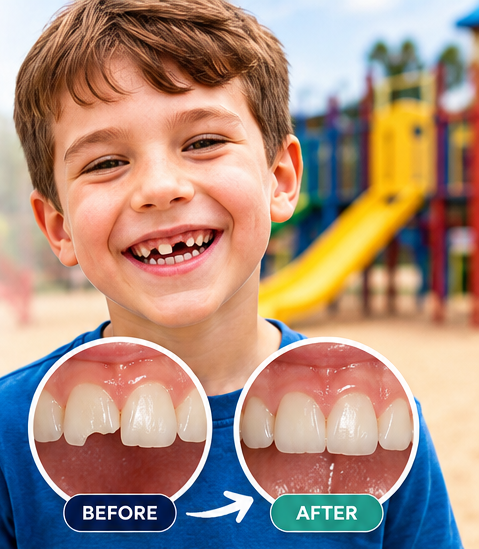
Childhood Dental Injuries Can Leave Lifelong Emotional Scars : How Early Care Protects Your Child’s Confidence
A playground tumble, a stray ball in sports, or an accidental bump can chip or break a front tooth in seconds. When that injury is fixed quickly and fixed well kids usually bounce right back. If the repair is delayed or looks obviously “different,” the effects can linger for years, quietly shaping how that child feels, smiles, and interacts as an adult.
Below is an easy-to-read guide for parents on why prompt, high-quality treatment of dental trauma matters for lifelong emotional well-being, plus clear action steps you can take today.
1. Looks and Confidence Go Hand-in-Hand
• A natural-looking repair prevents kids from feeling self-conscious about their smile.
• Children treated within 24 hours report the same confidence in their teeth five years later as peers who never had an injury (Côrtes 2019, Journal of Dentistry).
2. Lower Future Dental Fear
• Calm, pain-controlled care teaches children that dentists are helpers, not sources of anxiety.
• Kids who experienced gentle early treatment are much less likely to avoid dental visits as adults (Levin & Marcenes 2022, International Dental Journal).
3. Keep Speech and Eating on Track
• Front-tooth injuries can change tongue position, leading to lisps or whistle-sounds.
• Quick splinting or bonding stabilizes the tooth so normal speech and chewing develop uninterrupted.
4. Better Smiles, Better Opportunities
• Adults who like their smiles tend to speak up in class, smile in photos, and feel more at ease in job interviews.
• In a Brazilian survey, people with well-repaired childhood injuries felt noticeably more confident at work and in social situations (Freire-Maia 2021, BMC Oral Health).
What Parents Can Do Right Now
- Act Fast : See a dentist the same day, if possible.
- Choose Quality Repairs : Natural-looking composites or crowns are worth the investment.
- Follow Up : Schedule regular check-ups; a traumatized tooth can darken or shift months later.
- Watch for Worries : If your child hides their smile or shows dental fear, let the dentist know; early reassurance is powerful.
Key Takeaway
Fixing a broken tooth promptly isn’t just cosmetic its an investment in your child’s lifelong self-confidence, comfort, and opportunities.
References and Sources:
Côrtes M.I.S. et al. “Impact of Traumatic Dental Injuries on Children’s Quality of Life.” Journal of Dentistry, 2019.
Glendor U. “Long-Term Psychosocial Outcomes After Dental Trauma.” Dental Traumatology, 2018.
Levin L., Marcenes W. “Dental Anxiety After Childhood Injuries.” International Dental Journal, 2022.
Andreasen J.O., Andreasen F.M. Textbook and Color Atlas of Traumatic Injuries to the Teeth, 4th ed.
Freire-Maia F. et al. “Workplace Confidence and Dental Aesthetics.” BMC Oral Health, 2021.
National Institute for Health Research – Dental Trauma Resources (nihr.ac.uk).
American Association of Endodontists – Patient Trauma Guide (aae.org).