


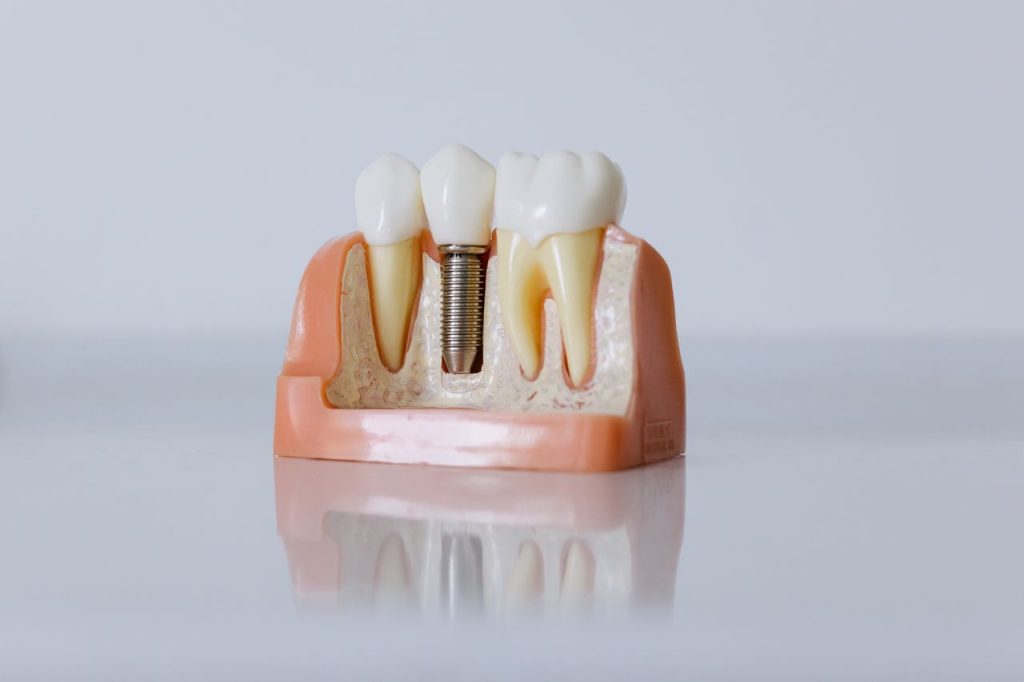
Dental implants have revolutionized the field of restorative dentistry, offering a permanent solution for tooth loss. If you’re considering dental implants, it’s essential to understand the procedure, its benefits, and the critical steps involved. This blog will provide you with all the information you need to make an informed decision.
What Are Dental Implants?
Dental implants are artificial tooth roots made of titanium that are surgically placed into the jawbone. They serve as a sturdy foundation for fixed or removable replacement teeth that are designed to blend in with your natural teeth. The main components of a dental implant include:
- Implant Fixture: The metal post that is surgically placed into the jawbone.
- Abutment: A connector that holds the replacement tooth or teeth securely in place.
- Crown: The visible part of the tooth that is custom-made to match your natural teeth.
Benefits of Dental Implants
Dental implants offer several advantages over traditional dentures and bridges, including:
- Durability: With proper care, dental implants can last a lifetime.
- Natural Appearance: Implants are designed to look and feel like natural teeth.
- Bone Health: Implants stimulate the jawbone, preventing bone loss that often occurs after tooth loss.
- Improved Function: Unlike dentures, implants do not slip or cause discomfort, allowing for better chewing and speaking.
The Implant Procedure
Step 1: Initial Consultation and CBCT Scan
The first step in determining if you are a suitable candidate for dental implants is scheduling an initial consultation. During this appointment, your dentist will conduct a thorough examination, including a Cone Beam Computed Tomography (CBCT) scan. This advanced imaging technique provides detailed information about the jawbone’s structure and density, helping to assess how much bone is available for the implant.
Step 2: Treatment Planning
After evaluating the CBCT scan results, your dentist will create a personalized treatment plan tailored to your specific needs. This plan will outline the number of implants required, the type of restoration needed, and the timeline for the procedure.
Step 3: Implant Placement
The implant placement is a surgical procedure performed under local anesthesia. Your dentist will make a small incision in the gum to expose the jawbone and then place the titanium post into the bone. After placement, the gum tissue is stitched closed, and osseointegration (the process of the bone fusing with the implant) begins.
Step 4: Abutment Placement
Once the implant has integrated with the bone, you will return to the dentist to have the abutment placed. This minor procedure involves attaching the abutment to the implant and allowing the gums to heal around it.
Step 5: Final Restoration
After the gums have healed, a custom-made crown will be placed on the abutment, completing the restoration. Your dentist will ensure that the crown matches the color and shape of your natural teeth for a seamless look.
Are You a Candidate for Dental Implants?
Most people with good oral health and sufficient bone density are candidates for dental implants. However, certain conditions such as uncontrolled diabetes or gum disease may need to be addressed before proceeding. A consultation will help determine your eligibility.
Contact Us for More Information
If you’re considering dental implants and want to learn more, please contact us at 02 9899 8686 or send an online inquiry by visiting our website at www.castlehillsmiles.com.au. Our team is here to guide you through the process and answer any questions you may have.–
Castle Hill Smiles
Tel: (02) 9899 8686
Email: castlehillsmiles@gmail.com
Web: www.castlehillsmiles.com.au
